Frontiers of Global Toxicology in a Changing World: Emerging Contaminants, Persistent Risks, and One Health Imperative
DOI:
https://doi.org/10.48797/sl.2026.474Keywords:
EditorialAbstract
Toxicology, as the central science devoted to understanding the adverse effects of chemical, physical, biological, and psychosocial stressors on living organisms, is currently at a pivotal turning point. In a world shaped by rapid technological, environmental, and societal transformations, it is increasingly evident that traditional risk assessment paradigms are no longer sufficient to address the complexity of modern exposure scenarios. Within this context, the One Health framework emerges not merely as a conceptual approach but as a scientific and strategic necessity for integrating human, animal, and environmental health into a unified, interdependent vision. In other words, it is time to redefine toxicology as the science of the harmful exposome, encompassing all external and internal stressors — chemical, environmental, technological, and societal — that disrupt biological balance across individuals, populations, and ecosystems, within an interconnected and evolving planetary system [1,2]. Indeed, Toxicology is no longer merely the study of poisons, but the science of systemic disruption, exploring how diverse stressors interact within complex living networks to shape health, disease, and resilience across the biosphere [3].
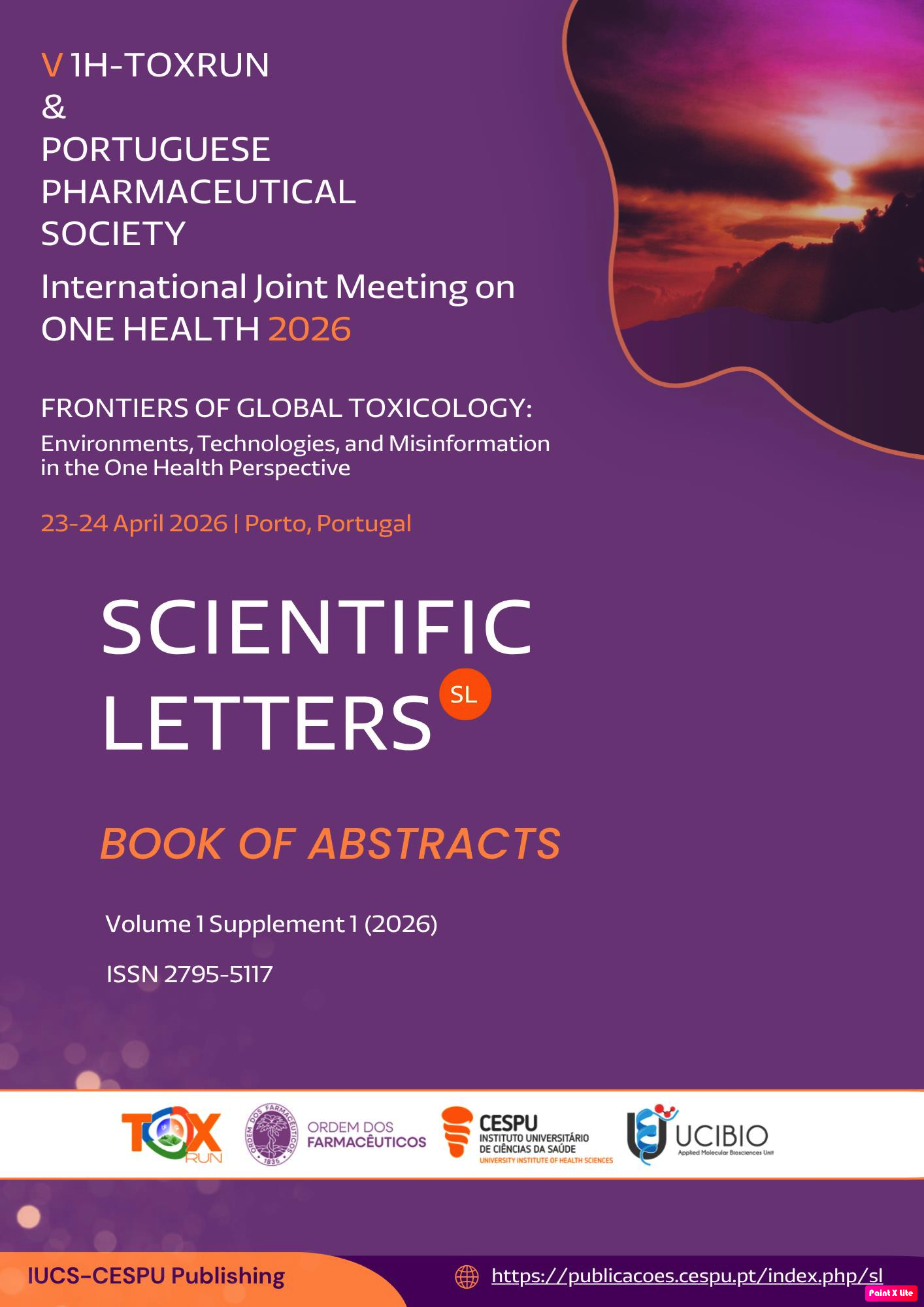
The 2026 Congress, under the theme “Frontiers of Global Toxicology: Environments, Technologies and Misinformation in the One Health Perspective”, reflects this evolution. Indeed, modern toxicology is increasingly challenged by new classes of contaminants, whose ubiquity, persistence, and still poorly understood effects raise significant concerns for science, regulation, and public health.
Among these, pharmaceutical residues have emerged as critical environmental contaminants due to their widespread use and incomplete removal in wastewater treatment systems [4]. These bioactive compounds can disrupt endocrine systems, alter microbiomes, and impact aquatic ecosystems, contributing to phenomena such as antimicrobial resistance and unintended biological effects in non-target organisms.
In parallel, electronic waste (e-waste) is among the most complex sources of exposure to hazardous chemical mixtures, including heavy metals, flame retardants, and persistent organic pollutants. In parallel, electronic waste (e-waste) constitutes one of the most complex sources of exposure to hazardous chemical mixtures, including heavy metals, flame retardants, and persistent organic pollutants [5,6]. The accelerating global digitalization intensifies this issue, particularly in regions with inadequate waste management, thereby exacerbating environmental and health inequalities.
A growing number of emerging contaminants are also attracting increasing attention due to their persistence, bioaccumulation potential, and largely unknown long-term effects. Among these, per- and polyfluoroalkyl substances (PFAS), often referred to as “forever chemicals”, stand out due to their extreme environmental persistence and widespread use in industrial applications and consumer products. Indeed, PFAS contamination has been detected in water, soil, wildlife, and human biological samples worldwide, raising concerns about endocrine disruption, immunotoxicity, and carcinogenicity.
An additional rapidly expanding area of concern relates to microplastics and nanoplastics, now detected across multiple environmental and biological matrices. Their ability to act as vectors for toxic substances, combined with potential inflammatory and genotoxic effects, poses critical questions that remain under active investigation.
Furthermore, the expansion of human activity into new domains, such as space, introduces emerging concerns regarding space-related contaminants, including advanced materials, propellants, and technological residues, whose toxicological impacts remain largely unexplored.
Light pollution, noise pollution, and other non-chemical stressors are also increasingly recognized as contributors to toxicological burden within the broader exposome concept [7]. These factors can interact with chemical exposures, influencing circadian rhythms, stress responses, and overall susceptibility to disease, underscoring the need for integrated, multidisciplinary approaches.
While engineered nanomaterials offer significant innovation potential, such as in medicine, cosmetics, food packaging, and advanced technologies, their small size and unique physicochemical properties enable them to cross biological barriers and interact with cellular systems in unpredictable ways. The toxicological implications of chronic exposure to nanoparticles remain insufficiently characterized, particularly regarding neurotoxicity, oxidative stress, and long-term accumulation [8].
In parallel, the increasing use of biocides and disinfectants, intensified during and after the COVID-19 pandemic, has led to their accumulation in aquatic and terrestrial environments. These substances may contribute to antimicrobial resistance and exert toxic effects on non-target organisms, including disruptions in microbial ecosystems that are essential for environmental and human health.
Armed conflicts and war-related activities represent a re-emergent, often underrecognized, but highly significant source of environmental contamination and toxic exposure [9,10]. War residues, including heavy metals from ammunition (such as lead and depleted uranium), explosive compounds, combustion by-products, and damaged industrial infrastructures, can persist in soils, water systems, and air long after hostilities cease. These contaminants not only pose immediate risks to civilian populations and military personnel but also contribute to long-term ecological degradation and chronic health effects, including cancer, neurological disorders, and reproductive toxicity. Moreover, conflicts frequently disrupt regulatory systems, waste management infrastructures, and environmental monitoring, exacerbating uncontrolled exposure scenarios. Within the One Health framework, the toxicological consequences of war highlight the urgent need for integrated surveillance, remediation strategies, and international cooperation to mitigate both the direct and indirect health impacts of environmental contamination in conflict and post-conflict settings.
Finally, climate change acts as a risk multiplier, altering the distribution, transformation, and toxicity of environmental contaminants. Rising temperatures, extreme weather events, and changes in ecosystems can enhance the mobility of pollutants, increase human exposure, and modify toxicokinetic and toxicodynamic processes. This dynamic interplay between environmental change and chemical risk underscores the urgency of adopting adaptive and forward-looking toxicological frameworks [11].
These few examples illustrate an unavoidable reality: toxicology is now confronted with a scenario of chronic, global, and multi-source exposure, increasingly influenced by climate change, where emerging contaminants coexist with persistent pollutants, demanding integrated, predictive, and sustainable approaches. Indeed, the issue of combined exposure to chemical mixtures, often referred to as the “cocktail effect,” is a major challenge for modern toxicology since real-world exposures rarely occur in isolation; instead, individuals and ecosystems are exposed to complex mixtures of pollutants that may interact synergistically, antagonistically, or cumulatively. Unfortunately, current regulatory frameworks are still largely based on single-substance assessments, highlighting a critical gap between scientific knowledge and policy implementation. Moreover, there is a significant future for toxicology as one of the foundational sciences of human knowledge, emerging from the earliest need to differentiate between harmful and safe substances and influencing the evolution of health and environmental sciences. In this evolutionary vision, while artificial intelligence represents a powerful transformative tool for toxicology, it is equally critical to acknowledge that technological innovation must be accompanied by robust scientific literacy. The spread of misinformation, particularly in areas related to health and the environment, represents an additional and growing risk that undermines public trust, policy effectiveness, and risk perception. Thus, 21st-century toxicology must position itself not only as an experimental and predictive science, but also as a science of communication, education, and societal engagement. The promotion of resilient communities, the transition toward a circular economy, and the implementation of sustainable practices depend on effective integration between science, policy, and society.
The four scientific sessions of this congress reflect these priorities. From emerging threats to global health to pharmaceuticals and their environmental impact, the challenges of intensive agriculture and illicit production, and the implementation of One Health in Portugal, the program promotes essential interdisciplinary reflection. The 2026 Congress, therefore, plays a crucial role as a platform for dialogue and knowledge construction. Oral and poster presentations will highlight scientific advances, foster collaboration, and reinforce toxicology's identity as an integrative discipline aligned with the Sustainable Development Goals. In an increasingly complex world shaped by interconnected chemical pressures, the path forward lies in a more holistic, anticipatory, and prevention-oriented toxicology. The challenges are significant, but so too are the opportunities to redefine the role of this science in protecting life in all its dimensions. This congress is proudly held as an International Joint Meeting on One Health, in a partnership of 1H-TOXRUN with the Portuguese Pharmaceutical Society, highlighting the strong institutional commitment of this professional body to advancing interdisciplinary collaboration, scientific excellence, and the implementation of One Health principles at both national and global levels. Therefore, a particularly noteworthy moment of the congress will be the high-level roundtable entitled “One Health: A Shared Mission Across Health Professions”, which brings together leading representatives from a wide range of Portuguese professional orders and associations in the health sector. This session embodies the very essence of the One Health paradigm, highlighting that the complex challenges posed by emerging and persistent toxic threats cannot be addressed in isolation by a single discipline. By convening experts from medicine, biology, pharmacy, nutrition, veterinary sciences, physiotherapy, psychology, nursing, and dentistry, this round table fosters a unique platform for interprofessional dialogue, strategic alignment, and collective responsibility. This discussion is expected to generate critical insights into how cross-sector collaboration can enhance prevention strategies, improve risk communication, and strengthen the implementation of One Health principles in Portugal, ultimately contributing to more resilient health systems and better protection against current and future toxicological challenges.
Maintaining a fragmented approach is increasingly misaligned with current scientific understanding and may pose challenges for effectively safeguarding public health, food safety, and ecological sustainability. It can limit the effectiveness of our responses to complex, interconnected risks. Therefore, there is a clear opportunity for policymakers to:
- Formally recognize the One Health approach as a national strategic priority, integrating it into public health, environmental, agricultural, and educational policies.
- Establish national and regional One Health coordination committees. These committees should play an active role in policy development, emergency response, and the promotion of transdisciplinary research. They must include experts from human and veterinary medicine, environmental sciences, microbiology, epidemiology, ecology, social sciences, and, crucially, toxicologists, as One Health and toxicology are inherently interconnected.
- Integrate the One Health approach into national strategic plans, including the National Health Plan, the National Biodiversity Strategy, the Antimicrobial Resistance Action Plan, and agricultural and climate policies.
- Promote awareness and training campaigns targeting professionals, students, and the general public to enhance literacy regarding this integrated vision of health.
- Invest in integrated and interoperable surveillance systems that enable early detection of emerging threats, with effective data sharing across sectors and regions.
- Promote curricular reforms to incorporate One Health strategies into higher education programs in health-related fields such as Medicine, Nursing, Biomedical Sciences, Pharmaceutical Sciences, among others.
- Provide financial support for projects and collaborative networks that foster sustainable, evidence-based solutions with a tangible impact on disease prevention and global health promotion.
Ultimately, the future of toxicology will depend on our collective ability to move beyond disciplinary silos and embrace a truly integrated vision of health, environment, and society. The challenges ahead are complex, global, and evolving, but so too is the capacity of science to anticipate, understand, and prevent harm. By fostering collaboration across sectors, strengthening the science–policy interface, and empowering the next generation of scientists and professionals, we can transform toxicology into a proactive force for safeguarding life on Earth. This congress represents not only a forum for scientific exchange but also a call to action: to rethink, connect, and lead. The responsibility is shared, and the time to act is now.
Cordial greetings
Ricardo Jorge Dinis-Oliveira
Félix Carvalho
References
1. Dinis-Oliveira, R.J. No Boundaries for Toxicology in Clinical Medicine: One Health, One Society and One Planet for All of Us. J Clin Med 2023, 12(8), 2808, doi:10.3390/jcm12082808
2. Sheng, Q.S. et al. Revolutionizing toxicological risk assessment: integrative advances in new approach methodologies (NAMs) and precision toxicology. Arch Toxicol 2025, 99(12), 4697–4707, doi:10.1007/s00204-025-04169-y.
3. Motsinger-Reif, A.A. et al. Advancing Exposomics: From Concept to Practice in Environmental Health Sciences. Environ Health Perspect 2025, doi:10.1289/EHP15561
4. Heacock, M. et al. E-Waste and Harm to Vulnerable Populations: A Growing Global Problem. Environ Health Perspect 2016, 124(5), 550–555, doi:10.1289/ehp.1509699
5. Kumar, P. et al. A review on e-waste contamination, toxicity, and sustainable clean-up approaches for its management. Toxicology 2024, 508, 153904, doi:10.1016/j.tox.2024.153904
6. Nguyen, M.K. et al. Occurrence and fate of pharmaceutical pollutants in wastewater: Insights on ecotoxicity, health risk, and state-of-the-art removal. Chemosphere 2024, 354, 141678, doi:10.1016/j.chemosphere.2024.141678
7. Gao, P. The Exposome in the Era of One Health. Environ Sci Technol 2021, 55(5), 2790–2799, doi: 10.1021/acs.est.0c07033
8. Pietroiusti, A. et al. Nanomaterial exposure, toxicity, and impact on human health. Wiley Interdiscip Rev Nanomed Nanobiotechnol 2018, 10(5), e1513, doi:10.1002/wnan.1513
9. Faa, A. et al. Depleted Uranium and Human Health. Curr Med Chem 2018, 25(1), 49–64, doi:10.2174/0929867324666170426102343
10. Mohapatra, S. et al. Quaternary ammonium compounds of emerging concern: Classification, occurrence, fate, toxicity and antimicrobial resistance. J Hazard Mater 2023, 445, 130393, doi:10.1016/j.jhazmat.2022.130393
11. Noyes, P.D. et al. The toxicology of climate change: environmental contaminants in a warming world. Environ Int 2009, 35(6), 971–986, doi:10.1016/j.envint.2009.02.006
Downloads
Published
How to Cite
Issue
Section
License
Copyright (c) 2026 Ricardo Jorge Dinis-Oliveira, Félix Carvalho

This work is licensed under a Creative Commons Attribution 4.0 International License.
In Scientific Letters, articles are published under a CC-BY license (Creative Commons Attribution 4.0 International License), the most open license available. The users can share (copy and redistribute the material in any medium or format) and adapt (remix, transform, and build upon the material for any purpose, even commercially), as long as they give appropriate credit, provide a link to the license, and indicate if changes were made (read the full text of the license terms and conditions of use).
The author is the owner of the copyright.