Application of the Buccal Micronucleus Cytome Assay for Genotoxicity Detection in Dogs
DOI:
https://doi.org/10.48797/sl.2026.501Keywords:
PosterAbstract
Background: In Europe, concern for animal welfare has been steadily increasing, covering both ethical considerations and health aspects [1]. Consequently, veterinary research has increasingly prioritized the search for biomarkers that can anticipate the development of serious diseases. Among the available approaches, the Buccal Micronucleus Cytome (BMCyt) assay stands out as a low-impact method, relying on cells collected from the buccal mucosa to assess genomic damage and chromosomal alterations. [2]. Higher occurrence of cellular irregularities, including the presence of micronuclei, has been closely linked to an elevated likelihood of developing conditions such as cancer, neurodegenerative diseases, and premature ageing, often linked to exposure to genotoxic and cytotoxic agents. While this method has been well established in human studies, research involving animals remains limited [3]. Objective:This work aims to outline an improved method for obtaining exfoliated buccal cells from dogs, while also examining a marker of genomic instability through both light and fluorescence microscopy techniques. Methods: Specimens were obtained from six female dogs housed in breeding facilities, including gestating females, with the purpose of evaluating chromosomal instability. Using methodologies adapted from human studies, key nuclear alterations were successfully detected and measured. Results: The results showed a greater proportion of micronuclei relative to findings reported in earlier studies. Methodological aspects, including the reduction of artefacts and the need for adequate personnel training, are essential for reliable analysis. Conclusions: This study confirmed the reliability of the BMCyt approach for collecting and analyzing canine samples, while also enhancing insight into the role of micronuclei as indicators of early pathological changes in this species.
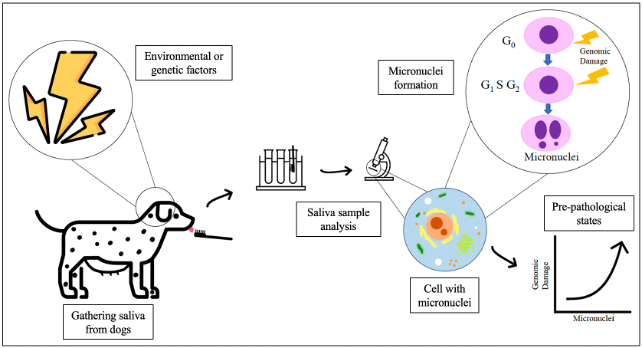
Figure 1. Key aspects involved in the collection and analysis of micronuclei as biomarkers of stress-related genotoxicity.
References
1. European Union Commission Proposes New Rules to Improve Animal Welfare. 2023, Available online: https://ec.europa.eu/commission/presscorner/detail/en/ip_23_6251 (accessed on 19 March 2026).
2. Thomas, P. et al. Buccal micronucleus cytome assay. Nat Protoc 2009, 4, 825–837, doi:10.1038/nprot.2009.53
3. Santovito, A. et al. Buccal micronucleus assay as a useful tool to evaluate the stress-associated genomic damage in shelter dogs and cats: New perspectives in animal welfare. J Vet Behav 2022, 47, 22–28, doi:10.1016/j.jveb.2021.09.007
Downloads
Published
How to Cite
Issue
Section
License
Copyright (c) 2026 Bruna Filipa Tavares da Costa, Alexandra Teixeira, Joana C. Prata, Daniel Pérez-Mongiovi

This work is licensed under a Creative Commons Attribution 4.0 International License.
In Scientific Letters, articles are published under a CC-BY license (Creative Commons Attribution 4.0 International License), the most open license available. The users can share (copy and redistribute the material in any medium or format) and adapt (remix, transform, and build upon the material for any purpose, even commercially), as long as they give appropriate credit, provide a link to the license, and indicate if changes were made (read the full text of the license terms and conditions of use).
The author is the owner of the copyright.